British Columbia Process Serving Restrictions What Days and Times Are Off Limits
Serving legal documents is not only about finding the right person. Timing matters. A document served on the wrong day, too late in the day, or in a way that breaks access rules can create delay, extra cost, and arguments about whether service was valid.
In British Columbia, process serving rules come from several places. Court rules set service methods and deadline calculations. Statutes may restrict service or enforcement on certain days. Holidays affect court timelines. Local bylaws, property rules, safety concerns, and specific court orders can also limit when and where a process server should attempt service.
This post explains the main days and times that can create problems in British Columbia, with practical guidance for planning service. It is for general information only and is not legal advice. For a deadline-sensitive matter, confirm the applicable rule or speak with a lawyer.
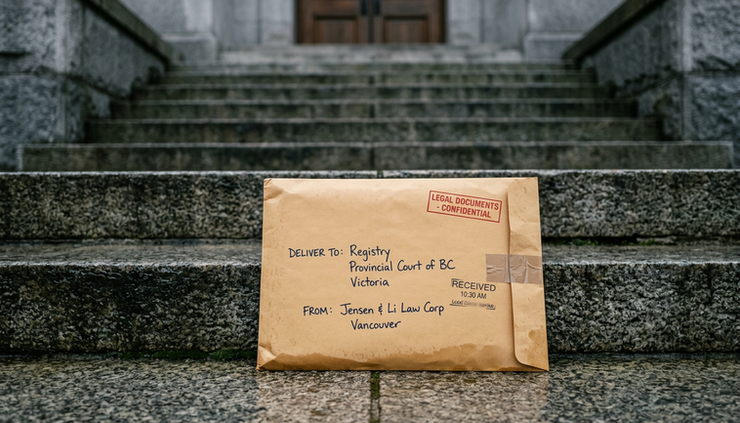
The main rule is that not every inconvenient time is legally off limits
British Columbia does not have a simple province-wide rule that says all civil documents may only be served between, for example, 9 a.m. and 5 p.m. Many documents can be served outside ordinary business hours if the method is lawful and the server can reach the person safely and respectfully.
That does not mean timing is open-ended. The key distinction is between:
A true legal restriction
Service may be prohibited, void, or improper.
A deemed service rule
Service may happen on one day, but the rules treat it as effective on a later day for deadline purposes.
A practical restriction
The server cannot trespass, force entry, harass someone, or ignore property and safety rules.
This distinction matters. If a document is served late on a Friday, it may have been physically delivered on Friday, but a court rule could treat service as occurring on the next business day for some purposes. If a document is served on a day when civil process is legally restricted, the issue may be more serious.
The safest approach is to plan service as if timing will be reviewed later. A clean affidavit of service should show who was served, what was served, where service took place, and the exact date and time.
Sundays and holidays require extra care
The biggest timing issue in British Columbia is Sunday service for civil process. BC has long-standing legal restrictions that make Sunday a high-risk day for serving civil process. Narrow exceptions may apply in criminal or urgent public safety contexts, but routine civil documents should not be planned for Sunday service unless a lawyer has confirmed that an exception applies.
For most civil lawsuits, family proceedings, small claims matters, debt claims, and similar proceedings, the practical rule is simple: do not schedule personal service for Sunday.
Saturday is different. Saturday service is not automatically prohibited in the same way, but it can still affect deadlines. Some court rules and service methods treat service on a Saturday, Sunday, or holiday as taking effect on the next business day. That can matter if a response period starts running from the date of service.
Public holidays also deserve attention. In BC, court registries are usually closed on weekends and court holidays. Common court closure days include:
New Year’s Day
Family Day
Good Friday
Easter Monday
Victoria Day
Canada Day
BC Day
Labour Day
National Day for Truth and Reconciliation
Thanksgiving Day
Remembrance Day
Christmas Day
Boxing Day
Substitute days when a holiday falls on a weekend
Not every holiday creates the same strict prohibition as Sunday service, but holidays can still affect court timelines. If a deadline falls on a holiday, the deadline may move to the next day the registry is open. If ordinary service takes place by email, fax, mail, courier, or another non-personal method, deemed service rules may also push the effective date forward.
The result is that a holiday service attempt might be physically possible, but still bad planning.
Day or time | Is it off limits | Why it matters |
Sunday | Generally avoid for civil process | Civil process served on Sunday can raise validity concerns |
Saturday | Not usually a blanket ban | Deemed service and deadline rules may shift dates |
Public holidays | Usually not a simple blanket ban for all documents | Registries are closed and deadlines may move |
After 4 p.m. | Not usually a physical service ban | Some rules may deem service effective the next business day |
Late night or very early morning | Usually not a fixed statutory ban | Safety, privacy, harassment, and trespass concerns increase |
Court-ordered restricted times | Yes, if the order says so | Ignoring an order can affect the proceeding and create legal risk |
Time of day affects deadlines even when service is allowed
A process server may be able to hand documents to someone at 6:30 p.m. on a weekday. That does not always mean the court will treat the document as served at 6:30 p.m. for every purpose.
BC court rules often use time-of-day cutoffs for certain service methods. A common issue is service after the court business day has ended, often around 4 p.m. depending on the applicable rule and method. If a document is served or transmitted after the cutoff, it may be deemed served on the next business day.
This matters when the receiving party has a limited time to respond. It also matters when the serving party must complete service before a deadline.
An example shows the problem.
A plaintiff needs to serve a notice before a deadline. The process server reaches the defendant at 7 p.m. on the final permissible day. If personal service is valid and the governing rule does not shift the effective date, the timing may work. If the document was served by a method subject to a next-business-day deeming rule, the plaintiff may be out of time.
For this reason, deadline-sensitive service should happen well before the last day and preferably before late afternoon.
The same caution applies to email, fax, mail, courier, posting, and other forms of ordinary or alternative service. These methods often have their own deemed service rules. Some count service days after mailing. Some treat email or fax after a certain hour as served the next business day. Some tribunal rules use different timelines from court rules.
A process server can complete the physical act of service, but the legal effect depends on the rules for the specific proceeding.

Local rules and property limits can make certain times impractical
Process servers in British Columbia must follow more than court rules. They also have to respect access limits, safety concerns, and local regulations.
A process server generally cannot:
Break into a home or vehicle
Push past a person at a doorway
Enter a restricted area without permission
Ignore a clear trespass notice
Impersonate police, sheriff staff, or court officials
Harass, threaten, or repeatedly disturb someone in an unreasonable way
These limits apply every day of the week.
In condos, apartment buildings, gated communities, hospitals, care homes, university residences, and secured workplaces, access rules may control when a server can enter. A building manager may refuse entry outside posted hours. A hospital may restrict access to patient areas. A workplace may have security procedures that affect service at reception or during shift changes.
Municipal bylaws can also matter. Local noise, nuisance, and trespass-related rules may not be written specifically for process servers, but they still shape what is reasonable. A doorstep service attempt at midnight may create complaints or safety risks even if no court rule lists midnight as prohibited.
This does not mean an evasive person can avoid service by refusing to answer the door. If a person is deliberately avoiding service, the serving party may have options, including:
More attempts at different lawful times
Service at another known address
Service at a workplace, if lawful and appropriate
Service on a corporation through its registered office
An application for substituted or alternative service
A court order validating service, where available
Good process servers record every attempt. Notes should include date, time, address, observations, vehicles present, lights on, conversations, and any reason service could not be completed. Those details can support an application for alternative service if personal service becomes impractical.
Special proceedings can have their own service timing rules
Not every legal document in BC follows the same service framework. The rules may differ depending on the type of matter.
Supreme Court civil proceedings, Supreme Court family proceedings, Provincial Court family matters, small claims, Residential Tenancy Branch proceedings, strata disputes, employment matters, human rights complaints, and administrative tribunal processes can each use different service rules.
Some documents must be personally served. Others can be served by ordinary mail, registered mail, email, posting, courier, or delivery to a specific address. Some rules require permission before using email. Others allow email only if the recipient has provided an address for service.
Family matters need particular care. If there is a protection order, no-contact order, safety plan, or history of family violence, direct personal contact by a party may be unsafe or prohibited. A neutral process server, sheriff, police officer, or another authorized method may be needed. The timing of service may also need to avoid school pickup, medical appointments, or other sensitive circumstances.
Residential tenancy matters also have strict service methods and deemed service timelines. A notice delivered by hand, posted on a door, placed in a mailbox, or sent by registered mail may be treated differently. The legal effect may not match the moment the paper was left.
That is why a process server should know the type of document being served, not just the address of the recipient.
At minimum, provide the server with:
The full name of the person or entity to be served
The document type
The court or tribunal involved
The service deadline
Any known safety concerns
Any court orders limiting contact
All known addresses and best times for lawful contact
Whether personal service is required
If a document must be served under a specific rule, say so clearly when booking service.
Poor timing can affect the entire legal proceeding
Service is the step that gives the other party proper notice. If service is late, invalid, or difficult to prove, the case can stall.
Common consequences include:
A hearing may be adjourned because the other party did not receive proper notice.
A default judgment may be challenged or set aside.
A limitation or filing deadline may become harder to meet.
Extra applications may be needed to validate service or extend time.
Costs may increase because a lawyer or process server has to fix the problem.
The court may question the reliability of the service evidence.
These problems are often avoidable. Most arise when service is left until the final day, attempted on a questionable date, or completed without checking the governing rule.
The affidavit or certificate of service is especially important. It should be precise. A vague statement that documents were served “in the evening” is less useful than a statement that service occurred at 7:12 p.m. at a specific address, with the recipient identified by name or confirmed by another reliable method.
A process server should also identify any unusual circumstances. For example, if the recipient refused to take the envelope and the server placed it at the person’s feet after identifying the documents, that detail should be recorded. If the person confirmed their name but closed the door, that should be recorded too.
Timing details help the court decide whether the service was fair, lawful, and effective.
Practical advice for serving documents in British Columbia
The best time to serve legal documents is not the last possible moment. Build in enough time for failed attempts, holidays, and unexpected access problems.
Use these practical guidelines.
Avoid Sundays for civil process
Treat Sunday as off limits unless legal advice confirms otherwise.
Do not rely on holiday service
Even if a holiday attempt is possible, plan around registry closures and deadline rules.
Serve before late afternoon when deadlines matter
If a response period or filing step depends on service, aim to complete service well before 4 p.m.
Check the exact rule for the proceeding
Supreme Court, Provincial Court, family, tenancy, and tribunal documents can all differ.
Give the process server full context
A server who knows the deadline and document type can plan better attempts.
Record every attempt
Detailed attempt notes can support substituted service if the person is avoiding service.
Respect property and safety limits
Lawful service does not permit trespass, intimidation, or forced entry.
Ask for court directions early
If service looks difficult, apply for alternative service before the deadline is urgent.
A careful plan is especially important near long weekends. For example, a Friday afternoon before a Monday holiday can create timing problems. If service is attempted after the cutoff, the effective date may shift to Tuesday. That shift can affect notice periods and hearing dates.
The same issue can arise around Christmas, New Year’s Day, Easter, and Remembrance Day. Courts may be closed, people may be away, and process servers may need more time to complete lawful attempts.
The safest approach is to serve early and document everything
British Columbia process serving restrictions are not based on one simple clock. Sundays are the clearest day to avoid for civil process. Holidays, Saturdays, and after-hours service may not always be forbidden, but they can change the effective service date and create deadline problems. Local access rules, safety concerns, and court orders can also make certain times off limits in practice.
For most legal matters, the safer plan is straightforward: confirm the service rule, avoid Sunday service, account for holidays, complete service before late afternoon where possible, and keep detailed proof.
Good timing protects the integrity of the proceeding. It also reduces the chance that a case gets delayed over a problem that could have been avoided with a better service plan.


